Free template · Also called a punch list
Snag list template for handover
A room-by-room checklist to find, photograph and close every defect before the keys change hands. Free in Excel and PDF — or pin each snag on the drawing in daftar.
Room-by-room snagging checklist
Inspect before furniture goes in, when every surface is visible. For each snag, record the room, exact location, a short description and a photo.
Walls, ceilings, finishes
Cracks, dents, uneven paint, stains, signs of water getting in.
Doors, windows, locks
Alignment, handles, seals, doors that rub, balcony doors that stick.
Floors, tiles, joinery
Chipped or hollow tiles, scratches, skirting, wardrobes.
Kitchen
Cabinets, hinges, worktop joints, sink and taps; appliances match the spec.
Bathrooms and drainage
Leaks under basins, water pooling, toilets, showers.
Electrical and lighting
Every switch, socket and fitting works; cover plates fitted.
Air conditioning
Cooling, noise, vibration, water leaks, thermostats, extract fans.
Balconies, parking, storage
Falls to drains, balustrades, the right parking bay, access cards.
Checklist based on haus & haus, Property snagging in Dubai.
For Dubai projects
Why every snag needs a dated photo
Under Dubai Law No. 6 of 2019, developers are liable for structural defects for ten years from the completion certificate, and must repair defective installations — mechanical, electrical, plumbing — within one year of handover.
That one-year window is where snag records earn their keep. A snag photographed, located and dated at handover is hard to dispute. A snag remembered later is easy to.
Not legal advice. Source: haus & haus.
Snagging in daftar
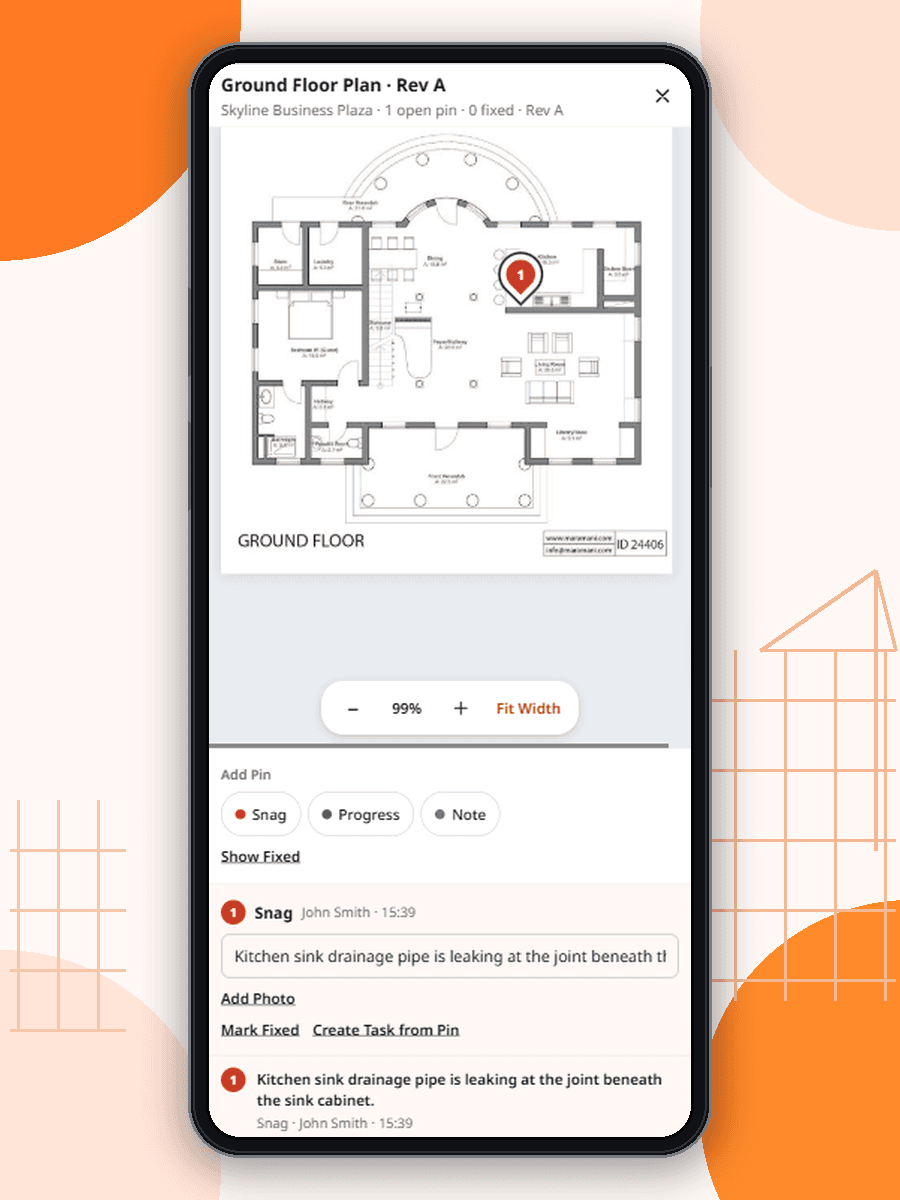
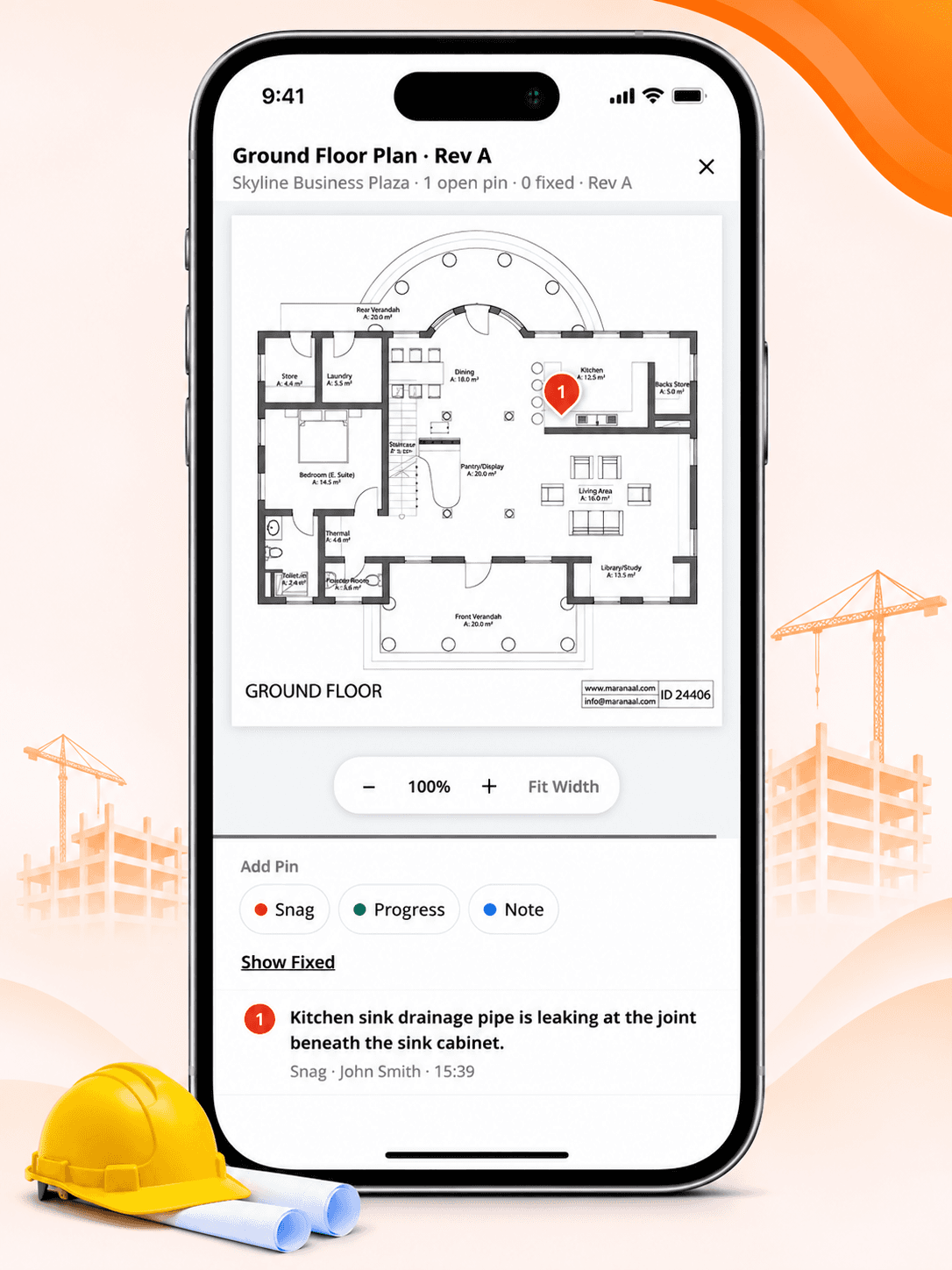
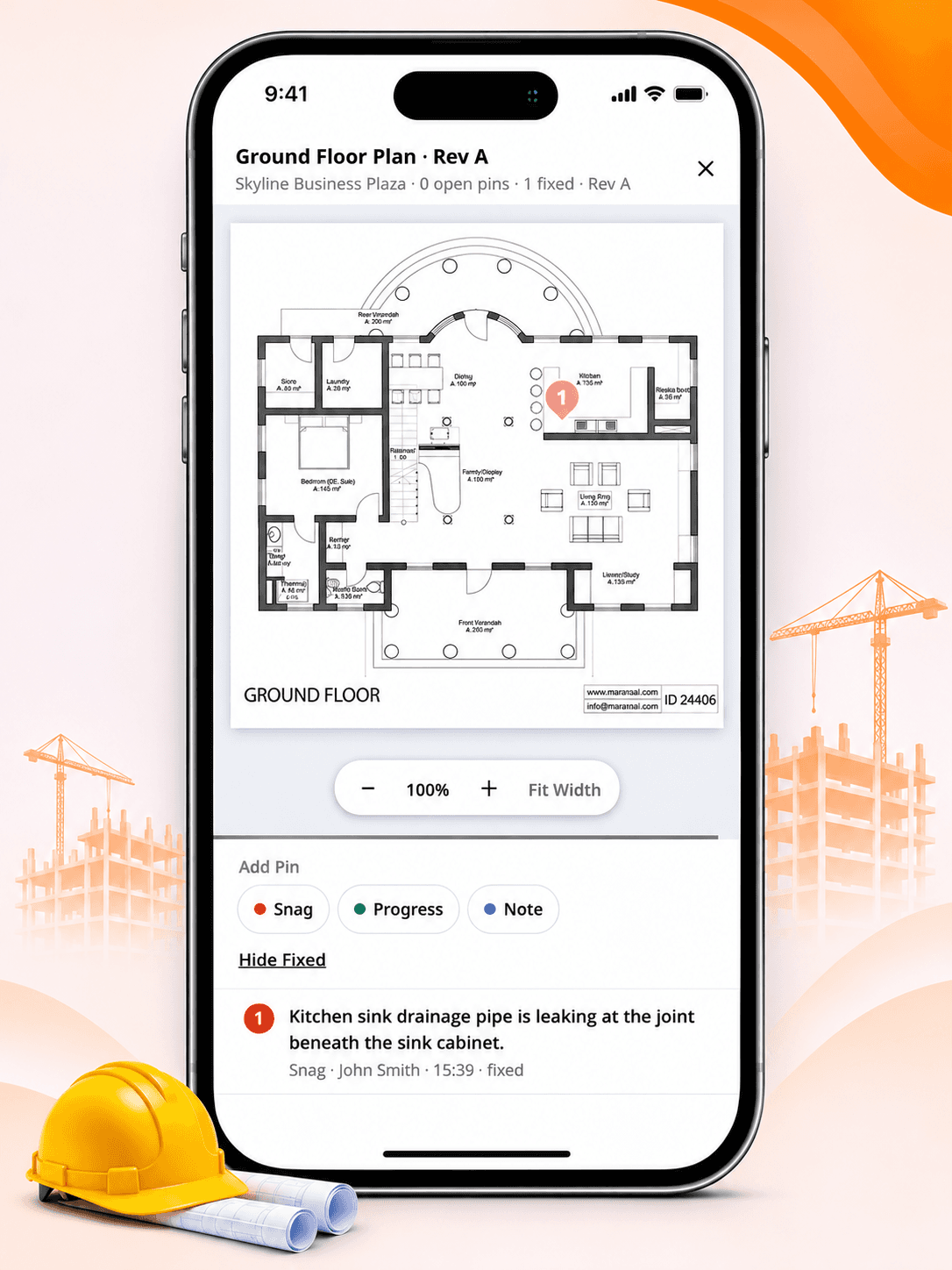
Pin it on the plan. Give it an owner. Close it with proof.
- Tap the exact spot on the drawing and take a photo.
- Assign it to a subcontractor with a due date.
- They close it with an after photo; you see what is late.
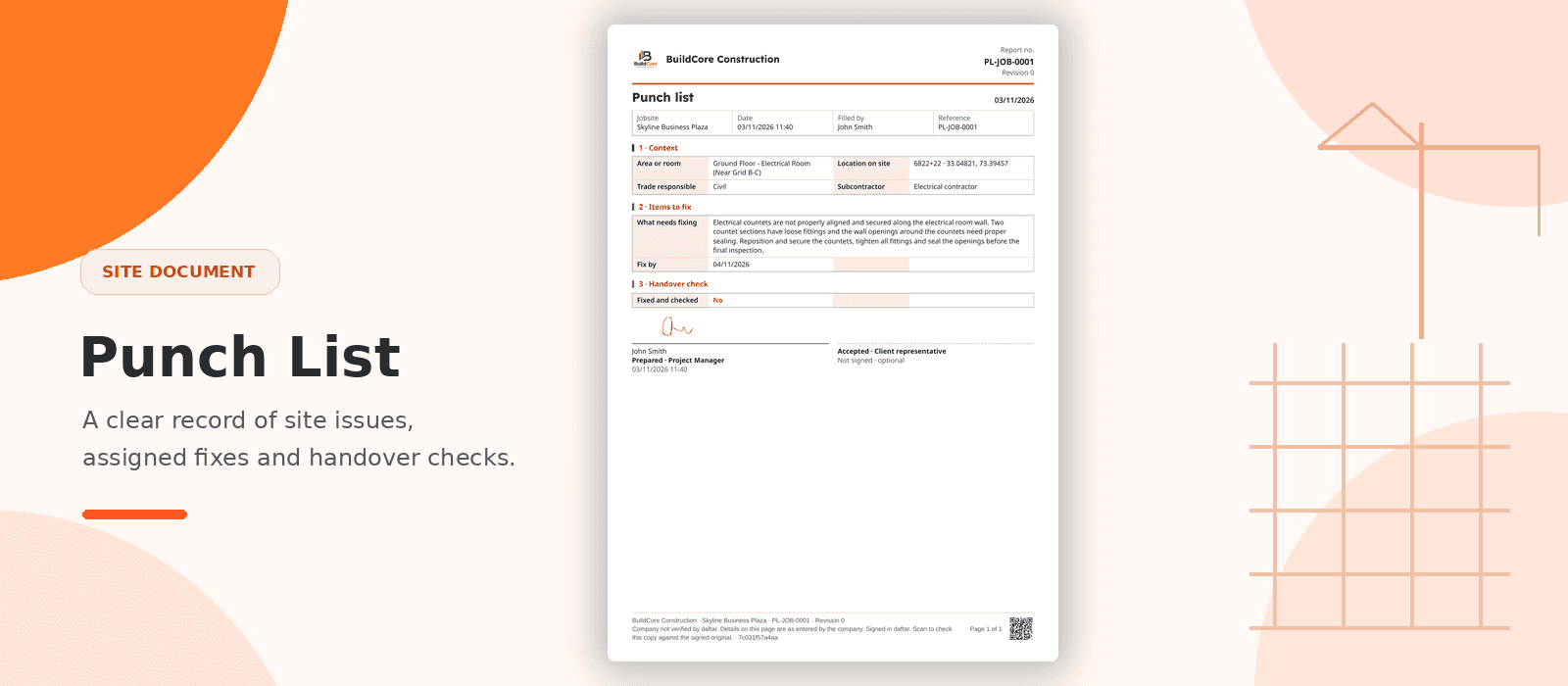
- Send the client a snag report on your letterhead.
The complete guide
How to run snagging from first walk to final sign-off
Snagging fails for the same reasons on every project: vague descriptions, no owner, no photo, and no re-inspection. The template handles the format. This guide covers the process.
The three rounds of snagging
- Round 1
Internal snagging
Your own team walks each area as it finishes, before the consultant sees it. The cheapest snags to fix are the ones you find first.
- Round 2
Handover snagging
The client or consultant inspects with you. Agree the list, the owners and the dates in the room.
- Round 3
Defects liability
Defects reported after handover, during the period set by the contract or the law. Every one needs a record of when it was raised and closed.
How to write a snag anyone can fix
Every snag needs seven things: location (building, floor, room, grid), the element, the defect, the expected standard, a photo, the responsible trade, and a due date.
| Weak | Strong |
|---|---|
| Bathroom tile issue | Apt 1204, master bathroom, floor by shower: 2 tiles cracked and 1 hollow when tapped. Replace to match. Tiling sub. Due [date]. |
| Door not good | Apt 1204, bedroom 2 door: rubs on frame at top, does not latch. Adjust hinges and strike plate. Joinery sub. |
| AC leaking | Apt 1204, living room FCU: condensate dripping onto ceiling below grille. Check drain slope and trap. MEP sub. Priority: high. |
Set priorities so the right snags go first
- High — safety, water getting in, anything that stops handover or occupation. Fix within days.
- Medium — something doesn't work as it should: doors, fittings, controls.
- Low — cosmetic: paint touch-ups, scratches, sealant lines.
Agree the priority levels and target times with the client before the handover walk, not during it.
Running the snag walk
- Walk with the people who can commit: your site manager, the consultant, and each trade's foreman.
- Go in a fixed order — top floor down, room by room — so nothing is missed.
- Test, don't just look: run taps, switch every light, open every door and window, run the AC.
- Record each snag on the spot with a photo. Lists written up later lose detail.
- Share the list with every trade the same day, with due dates.
- Re-inspect, and close items only once you've seen the work.
Questions
When should snagging start?
As each area nears completion, not only at the end. Then re-inspect after repairs and close items only once you've seen the work.
Can subcontractors close their own snags?
In daftar they mark it done with an after photo; the item closes only when your team accepts it.
Can the client see the snag list?
Invite them as a guest. Guests see only the conversations and reports you share, and never add to your bill.
What is the defects liability period?
The period after handover when the contractor or developer must fix defects that appear. Its length is set by the contract and, in some places, by law. In Dubai, Law No. 6 of 2019 requires developers to repair defective installations within one year of handover and makes them liable for structural defects for ten years (haus & haus).
Who pays to fix snags?
Usually the trade that did the work, under its subcontract. A clear record — location, photo, date raised, who was told — is what lets you recover the cost.
Is a punch list the same as a snag list?
Yes — two regional names for the same list of defects to fix before a project is accepted as complete. This template works for both.
Bring the site and the office back together
Apps for iPhone and Android, and a web dashboard for the office.